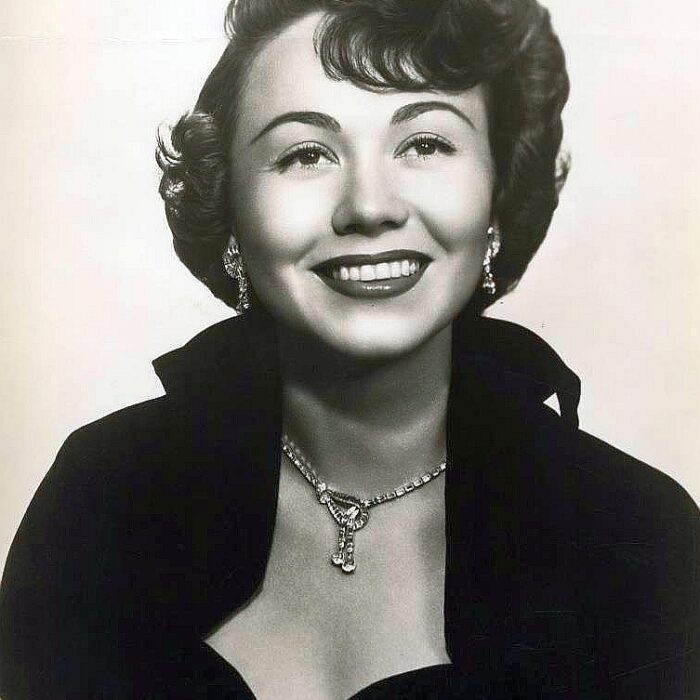
Born Yvonne Marie Antoinette Ja Mais in Savannah in 1922, Haines was of French-Irish descent. Her mother Mildred JaMais (February 15, 1899 – January 7, 2010) died about sixteen months after her daughter, shortly before her 111th birthday. Connie learned the art of vocals quite early; her mother was both a voice and dance teacher. Living in Jacksonville after her parents divorced, she began airing over the radio before the age of ten. In 1931, she appeared over NBC radio as Baby Yvonne Marie, the Little Princess of the Air, sang with Paul Whiteman’s Orchestra one year later, and in 1934 won a vocal contest on The Fred Allen Show.
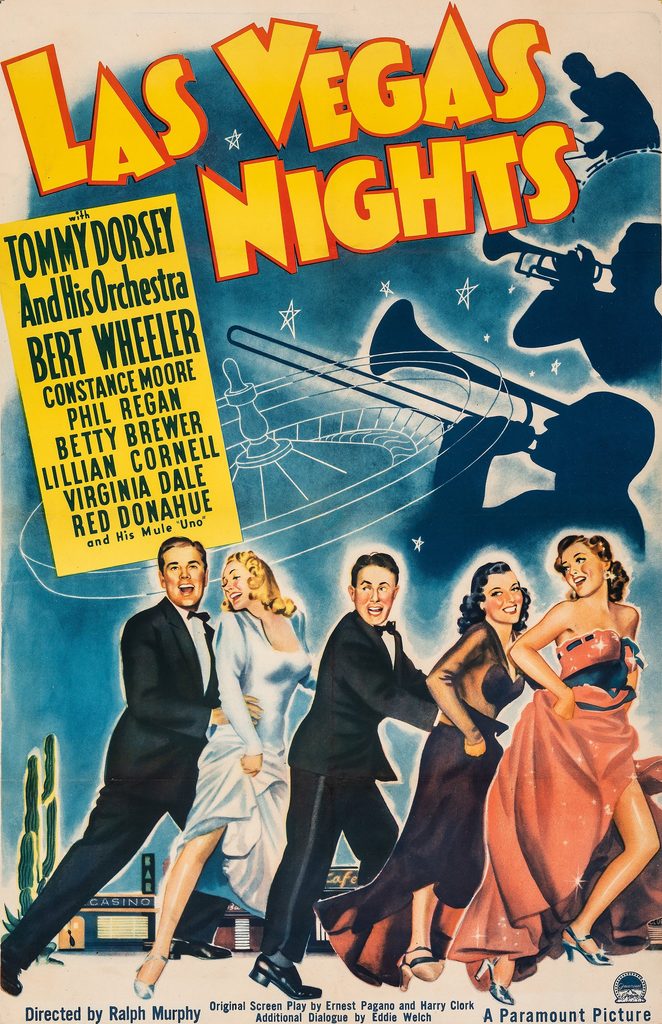
Haines’ first big band contract was with Howard Lally. Her professional debut in New York came at the Roxy Theatre when she was 14. By the age of 16 she was singing with Harry James‘ band (her first professional gig with Frank Sinatra). Harry James, asked her to change her name. She recalled: ” He said you don’t look like Yvonne Marie Antonette JaMais. And there would be no room on the marquee for me. You look like a Connie to me.” Financial problems forced James to fire both Sinatra and (later) Haines, though both found work with the same leader: Tommy Dorsey. Beginning in 1940, Haines, Sinatra, and the later addition of the Pied Pipers made Dorsey‘s one of the strongest bands from a pop standpoint, and Haines appeared on several hits: “Two Dreams Met,” “Oh, Look at Me Now,” “Kiss the Boys Goodbye,” and “What Is This Thing Called Love?” Haines credited Dorsey with developing her style further.
After leaving Dorsey‘s band, Connie sang with the Bob Crosby Orchestra during 1941. She became the lead singer on The Abbott and Costello Show from 1942 to 1946. As a solo singer, she recorded singles and LPs for a variety of labels (Coral, Capitol, Mercury, Columbia, and Dot) during the next few decades.
Haines starred in Rhapsody in Rhythm on NBC radio in the summer of 1946. In the early 1950s, she had a program, Connie Haines Entertains, on the short-lived Progressive Broadcasting System.
In the early 1950s, Haines joined with Jane Russell, Beryl Davis and Della Russell to do an impromptu performance at a charity night for Hollywood Episcopal Church. Their version of the spiritual Do Lord not only entertained the audience but also attracted the attention of people in the recording industry. With a recording contract in hand, the group (with Rhonda Fleming having replaced Della Russell) recorded several gospel songs, donating all of their royalties to the churches to which each belonged. The group also appeared on The Colgate Comedy Hour and the Arthur Murray program on television.
She later did a television show with Frankie Laine. On February 7, 1960, she became hostess of Faith of Our Children. Beginning June 18, 1961, Haines had her own TV program, the Connie Haines Show, which also featured Ziggie Elman, Frankie Carle and the Steiner Brothers. She had also appeared on the Ed Sullivan show.
Haines gave “command performances before three presidents of the United States: Dwight Eisenhower, John Kennedy and Lyndon Johnson.”
Quite surprisingly, as part of Motown Records diverse signing of new and established artists, in 1965 Haines was one of the first white singers to record for Motown recording 14 songs written by Smokey Robinson, including her 1965 release “What’s Easy For Two Is Hard For One” previously recorded by Mary Wells. In 1965 she recorded the first version of “For Once in My Life“, which was later a hit for Stevie Wonder, but her version was not released until 2015.
She continued performing into the ’90s, but passed away in 2008 of the neuromuscular disease myasthenia gravis .
Haines’ talent extended beyond the realm of music. She appeared in several films, including “Private Buckaroo” (1942) and “Broadway Rhythm” (1944), showcasing her singing abilities on the silver screen.
Despite her successful career, Haines faced personal challenges, including a struggle with alcoholism, and paralysis. Her contributions to the music industry earned her accolades and recognition, including induction into the Big Band Hall of Fame.
Connie Haines continued to perform well into the 2000s, captivating audiences with her timeless voice and charm. She passed away on September 22, 2008, in Clearwater, Florida.
Appetizers