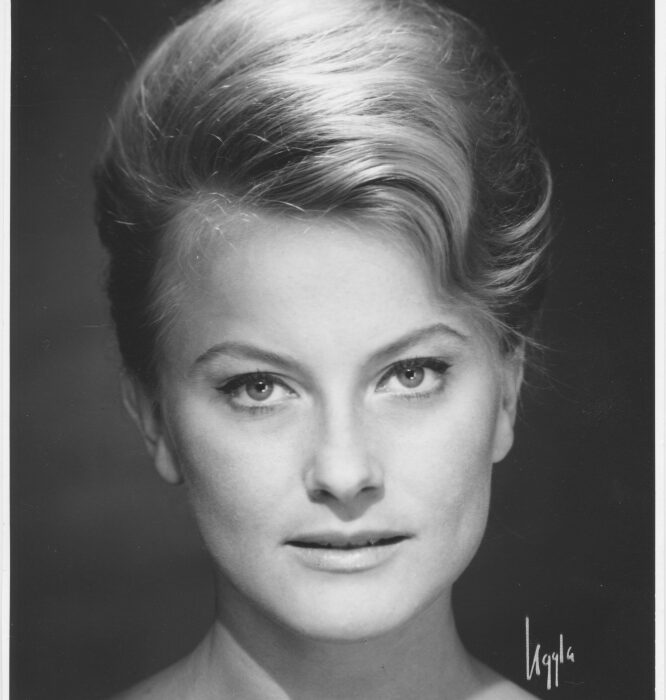
Monica Zetterlund was born in 1937. She grew up in Hagfors with her father, Bengt Nilsson, who was very keen on jazz music. He ran a music shop with his brother Lars where Monica became familiar with the leading jazz musicians and jazz singers. She began to sing in her father’s band when she was 14 years old. In 1956 Monica Zetterlund came second in a singing competition which was held at the famous dancing spot and jazz club called Nalen in Stockholm. That same year she was a singer in Ave Lundell’s band in Karlstad and later she also sang in Kjell Carlsson’s band.
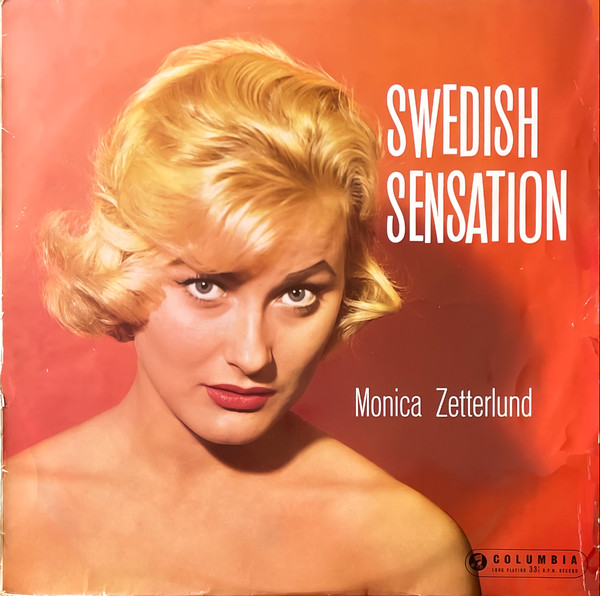
In 1956 Monica Zetterlund took a sabbatical from her job as a switchboard operator at Televerket in Karlstad as she had joined the Ib Glindemann band in Denmark. The following year she recorded her first records under her own name in English, which were released as EPs. Even though she didn’t know the language well at that stage, she learnt the lyrics to English songs. She recorded an LP called Swedish Sensation in 1958 released on Columbia when she was 21, in 1958, It was the first of more than twenty albums she released throughout her career. In early 1959 she travelled to Great Britain and Paris and to the USA as well, where an attempt was made at launching her American career. Although she generated a certain interest abroad she was never as popular outside Sweden as she was at home. Nevertheless the attention she got abroad played an important role in her Swedish jazz career.
In 1960 Monica Zetterlund asked Beppe Wolgers to write lyrics in Swedish for her. Although this wasn’t the first time Monica Zetterlund sang in Swedish it became a turning-point in her career. That same year she also took theatrical acting lessons and made her debut as a cabaret artist in the production called Klappa din hand in Stockholm.
Monica Zetterlund made her TV debut in 1961 when she appeared on the I rampljuset show. She also toured public parks that year where she sang material from the show and made herself known to a wider audience in Sweden. One of the main Monica Zetterlund songs to strike a chord with a wider audience was “Sakta vi gå genom stan”. This was a version of “Walking my baby back home”, to Swedish lyrics.
In the early 1960s, as it became increasingly difficult to find an audience who was interested in jazz, Monica Zetterlund took a more versatile approach to her activities. She continued to be a jazz singer but also began to appear in the Gröna Hund revue show and in theatrical productions, as well as on TV-entertainment programmes. In 1963 she performed as the Swedish entry in the Eurovision song contest, singing “En gång i Stockholm”, she acted in Party at the Lilla theatre in Stockholm and in Hålligång at Berns.

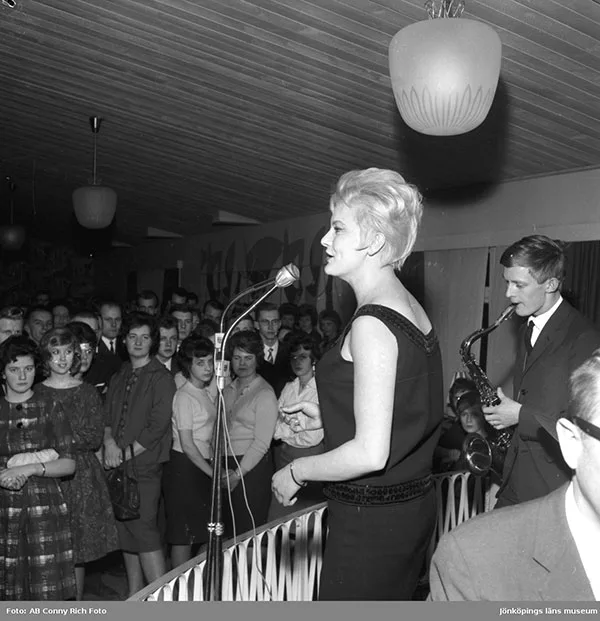
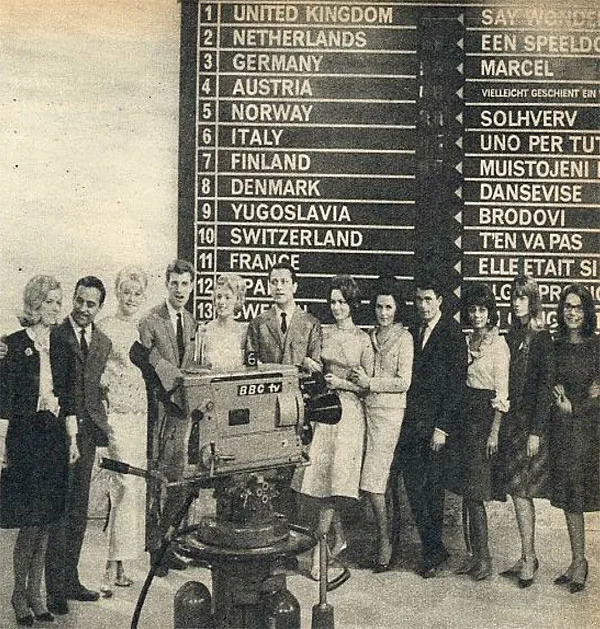
Zetterlund, sadly, did not score any points (the dreaded nul points) and came joint-last in the competition. However, this placing did not unduly affect her career. The 1963 Eurovision Song Contest saw three performers take part, each of whom continued to enjoy successful musical careers despite not winning: Françoise Hardy (who came fifth), Nana Mouskouri (who came eighth) and Monica Zetterlund.
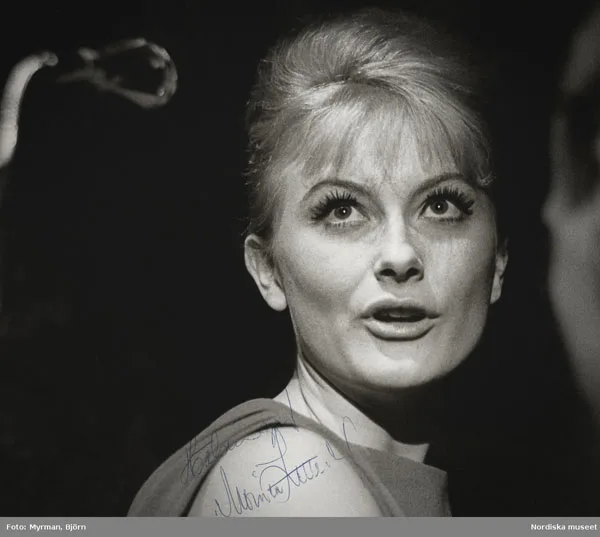
In 1964, she recorded the jazz album Waltz for Debby which was a critical success. It was a one-time collaboration with the Bill Evans Trio of 1964 (consisting of drummer Larry Bunker and bassist Chuck Israels). Zetterlund became proud of this album above her others, saying it was “the best I’ve done”. She would also work with other leading American players including Louis Armstrong, Stan Getz, Steve Kuhn and Quincy Jones,
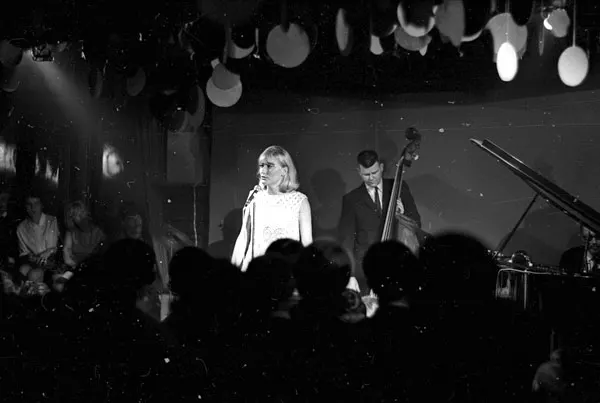
From the mid-1960s onwards, she began acting in films, television shows and plays.
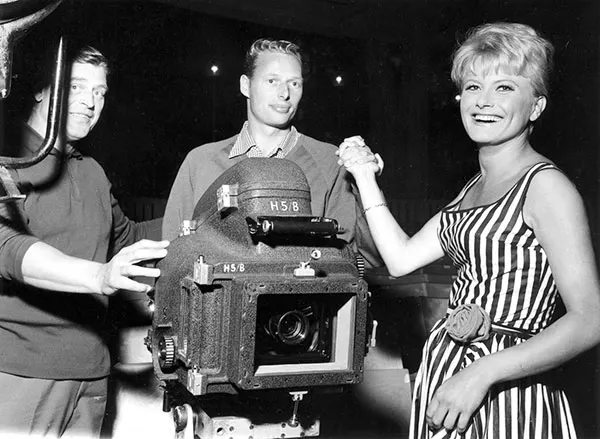
Her most memorable role was in The Emigrants, a 1971 film which was nominated for five Academy Awards and also starred Max von Sydow andLiv Ullmann. It tells the story of emigration from Sweden to the USA in the 1850s. In the film, Zetterlund played Ulrika, a former prostitute who travels to Minnesota with the main characters.
She appeared in over 20 movies and also made a number of television appearances.
Later in life, she suffered from scoliosis which had developed following a childhood accident and was consequently forced to perform seated. In 2005, Monica Zetterlund, aged 67, died tragically in a house fire in Stockholm.
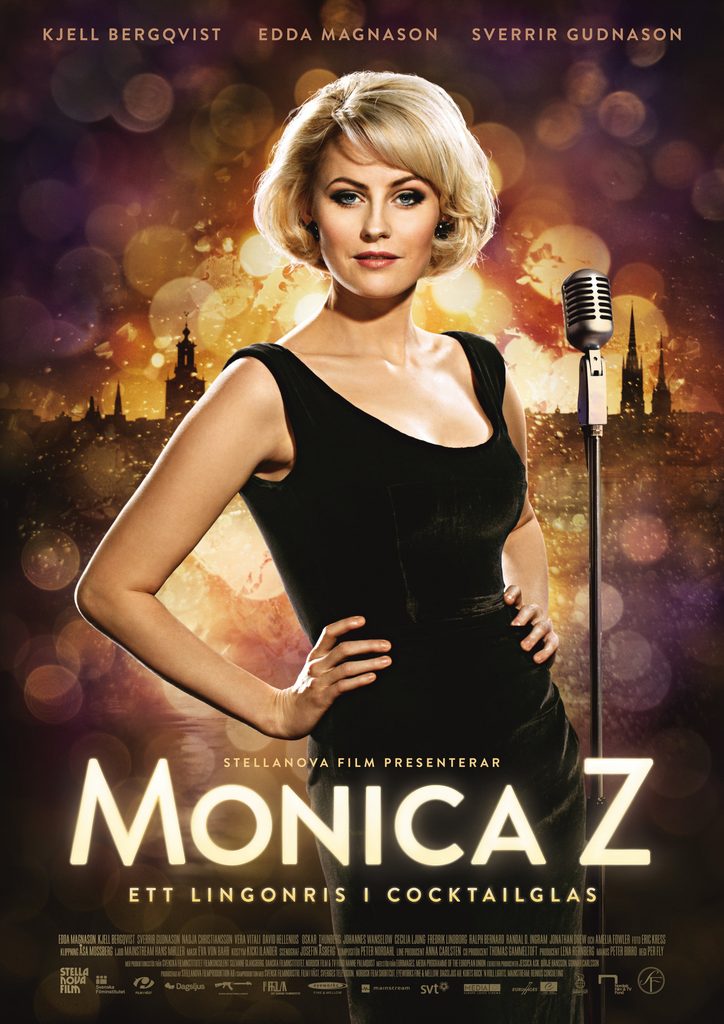
In 2013 Peter Birro’s prize-winning film Monica Z, which was based on her life, was released. In 2014 she was entered into the Swedish Music Hall of Fame.
Appetizers