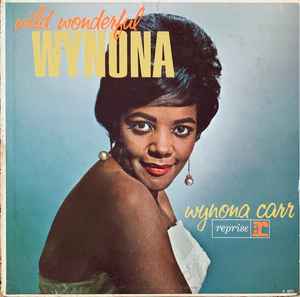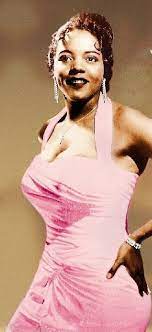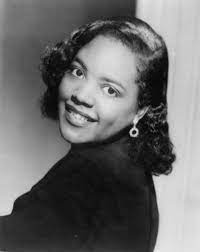
Wynona Carr (August 23, 1923 – May 11, 1976)[1] was an American gospel, R&B and rock and roll singer, pianist, and -songwriter, who recorded as Sister Wynona Carr when performing gospel material.
Wynona made a remarkable series of recordings for Specialty Records between 1949 and ’59, at first performing gospel music, then rhythm and blues. She started out as a gospel singer, forming her own five-piece group The Carr Singers around 1945 and touring the Cleveland/Detroit area. Art Rupe signed her to his Specialty label, giving Carr her new stage name “Sister” Wynona Carr (modelled after pioneering gospel singer Sister Rosetta Tharpe) and cutting some twenty sides with her from 1949 to 1954, including a couple of duets with Specialty’s biggest gospel star at the time, Brother Joe May.
Record companies in the 1950s were notorious for trying to persuade their gospel artists to jump the fence to the secular side, but in the case of Carr and Specialty, the process was reversed. “I tried singing spirituals for 14 years, when all the time my real thoughts were in the show world.”
Her gospel sides, liberally laced with jazz and blues elements, sold poorly, save for her brilliant 1952 tale of a sporting match between Jesus and the Devil, “The Ball Game,” which became one of the strongest sellers in Specialty’s gospel catalogue. “Our Father,” a musical treatment of the Lord’s Prayer that she’d written with Alexander, gave the Original Five Blind Boys of Mississippi their biggest hit, in 1950 on Peacock Records.
The singer’s third secular release, a rock ’n’ roll torch ballad titled “Should I Ever Love Again?,” peaked at number 15 on Billboard’s R&B chart in early 1957, by which time Carr had contracted tuberculosis. In 1961, Carr signed with Frank Sinatra’s Reprise Records and released an unsuccessful pop album. She moved back to Cleveland, sinking into obscurity and suffering from declining health and depression; she died there.
Carr’s contralto vocals have a sensual, husky quality quite unusual (or even inappropriate) for gospel singers in her day, which made her eventual switch to R&B and rock & roll seem a logical choice in retrospect. The same goes for her idiosyncratic use of metaphors and themes in her gospel songs: baseball (“The Ball Game”), boxing (“15 Rounds For Jesus”) and a popular TV show (“Dragnet For Jesus”). This penchant for novelty-like songs also shows in Carr’s later R&B repertoire, for instance “Ding Dong Daddy”, “Nursery Rhyme Rock” and “Boppity Bop (Boogity Boog)”.
Appetizers